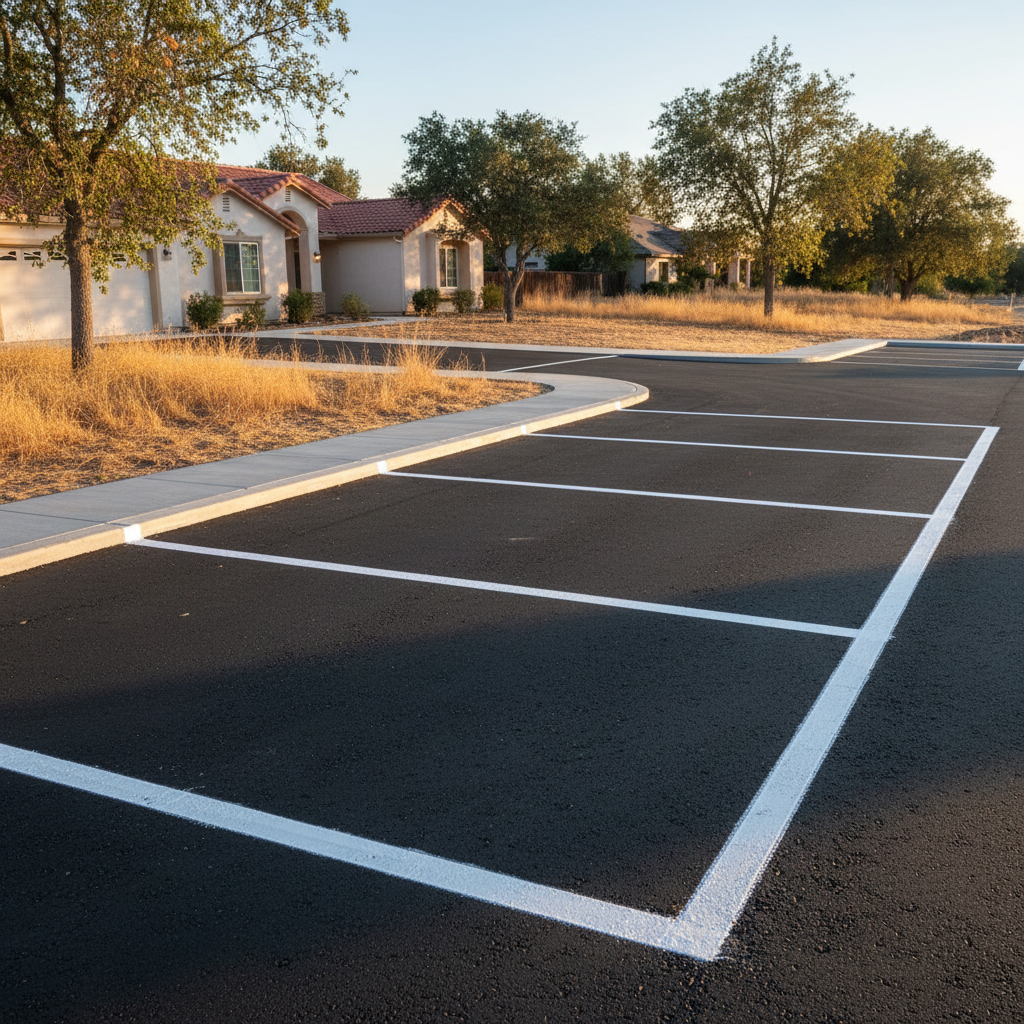
Ever notice how some fresh paint lines on asphalt stay sharp for ages, while others just disappear too fast? Here in Kingsburg, it usually boils down to knowing our local weather and hitting that perfect timing. As your neighbor at Kingsburg Diamond Asphalt, I've really seen firsthand what our scorching summers and damp winters do to asphalt striping. So, let's chat about when to get the work done, what kind of weather truly matters, and how to keep those lines looking good.
When's the Best Time to Stripe Your Asphalt in Kingsburg?
You might think painting lines is a piece of cake, but for them to actually stick and last, the conditions have to be just right. When we're striping asphalt, we're really looking for that sweet spot: warm, dry, and not too humid.
- Spring and Fall are Prime Time: Generally, these seasons are your best bet. Our spring and fall here in Kingsburg give us those ideal conditions. Temperatures usually sit between 50°F and 85°F, which is perfect for the paint to grab onto the asphalt and cure properly. Plus, we typically see less humidity and rain during these months.
- Summer Can Work, But Be Careful: Kingsburg summers, as we all know, are famous for being hot and dry. While no rain is fantastic, extreme heat can actually cause problems. If it's too hot, the paint might dry too quickly, meaning it won't bond as well and could peel or crack sooner than it should. We're talking about those brutal 100+ degree days we get, especially around July and August, when the pavement itself can get unbelievably hot. If you absolutely need summer striping, we'll often schedule it for early mornings to beat the worst of that heat.
- Winter is Tricky: Try to skip winter if you can. Cold temperatures, especially anything below 50°F, make it really tough for paint to cure correctly. And even though Kingsburg doesn't get a ton of rain compared to other spots, our rainy season runs from about October to May—and February is usually our wettest month. Rain on fresh striping? That's just asking for smeared, diluted lines and poor adhesion.
Weather Conditions That Make or Break Striping Work
It's not just about the season; the day-to-day conditions matter too. When we're planning your striping project, we keep a close eye on a few key things:
- Temperature: I mentioned it already, but it's worth saying again. Both the air and pavement temperature need to stay consistently above 50°F, and ideally between 50°F and 85°F, for the best results. If it's too cold, the paint won't cure right. If it's too hot, it dries too fast and won't bond properly.
- Moisture (Rain & Humidity): This is a huge one. The asphalt surface absolutely has to be bone dry. Even high humidity can mess with the drying process, making the paint take longer to cure or causing issues like bubbling and blistering. If rain is in the forecast within 24-48 hours, we'll have to reschedule. Nobody wants their fresh lines washing away, right?
- Wind: Strong winds can cause problems like overspray, making lines uneven, or blowing debris onto wet paint. It can also make paint dry too quickly, much like extreme heat.
Protecting Your Striping Investment Year-Round
Once those crisp, new lines are down, you want them to last. Here's how you can help protect your investment:
- Regular Cleaning: Dirt and debris can hide lines and wear them down. A good sweep or power wash (carefully, not too high pressure!) can keep them visible.
- Address Cracks Promptly: Our Central Valley soil, especially the clay-rich types we have around Kingsburg, can shift and cause cracks. If water gets into those cracks and under your asphalt, it can lead to bigger problems that affect the integrity of your entire pavement, including your striping. Get cracks sealed up before they get worse, especially before our winter rains hit.
- Consider Sealcoating: Sealcoating isn't just for protecting the asphalt itself; it also gives you a fresh, dark surface that makes new striping really pop and helps the paint stick better. It protects against UV damage from our intense Kingsburg sun, which can fade lines quickly. Most commercial properties need restriping every 2-3 years, but regular sealcoating can extend the life of your pavement and its markings.
- Use Quality Materials: Here at Kingsburg Diamond Asphalt, we always use high-quality, traffic-grade paints. These are specifically made to stand up to our local conditions—the sun, the heat, and the occasional moisture. That makes a huge difference in how long they last.
Getting your asphalt striping done right means understanding our local weather patterns and planning ahead. When you combine good timing with quality materials and a bit of ongoing care, you'll ensure your property's lines stay clear, safe, and looking sharp for years to come.