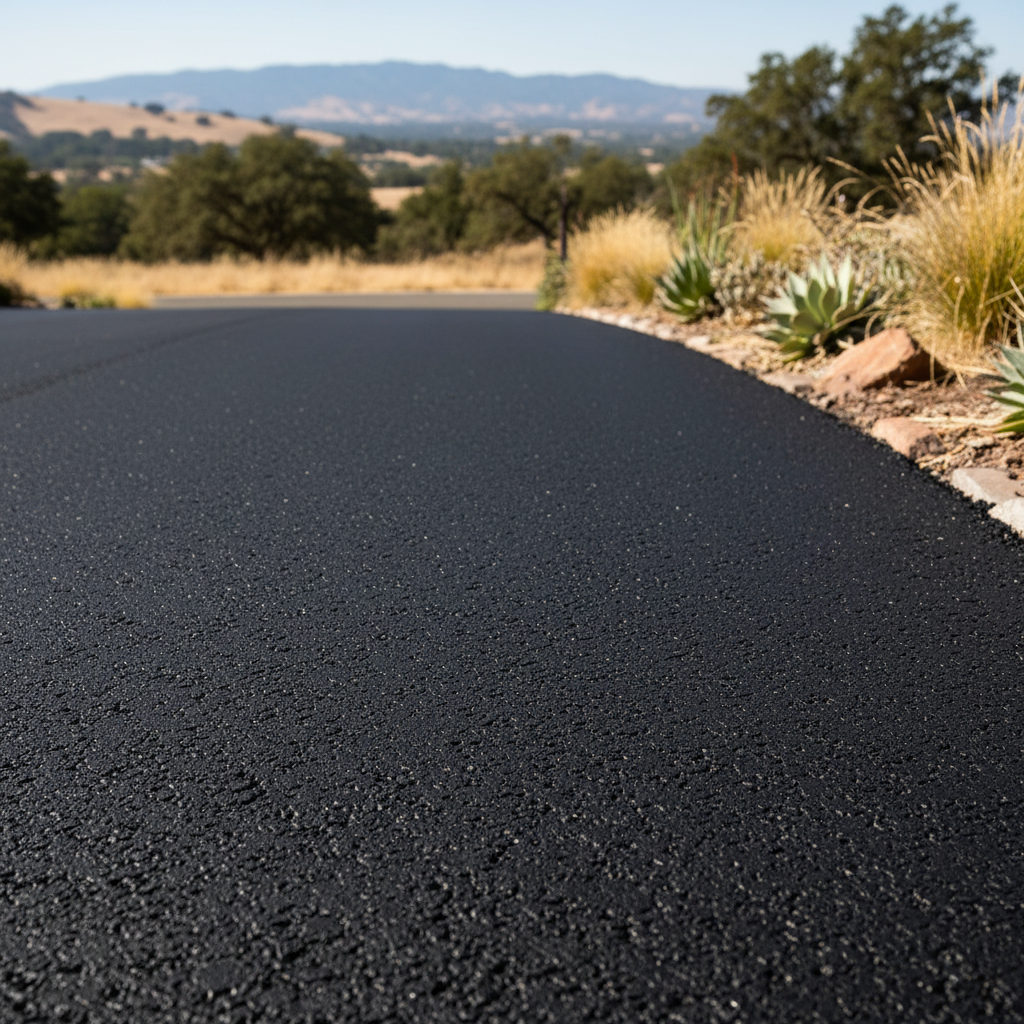
What's the real difference between asphalt and concrete for a residential driveway?
This is probably the most common question I get, and it's a good one. For residential driveways, it mostly comes down to cost, flexibility, and maintenance. Asphalt, which we also call blacktop, is usually cheaper upfront. It's made from aggregate (like stone and sand) mixed with a petroleum-based binder. Concrete is a mix of cement, aggregate, and water. Think of asphalt as more flexible; it can handle our hot Kingsburg summers and cold winters better without cracking as much as concrete might. It's designed to flex with temperature changes and ground movement. Concrete is rigid. When it cracks, it's usually a pretty distinct break. Repairing asphalt is generally easier and less noticeable too – you can patch it. Concrete repairs often stand out more.
Another big difference is maintenance. Asphalt needs sealing every few years to protect it from UV rays, water, and chemicals. Concrete needs sealing too, but maybe not as frequently, and it's mostly for stain protection and to prevent surface flaking. If you're looking for something that's quicker to install and use, asphalt usually wins there too. We can often get you back on your driveway within a day or two after paving, while concrete needs a week or more to cure properly before heavy use.
How long should a new asphalt driveway last in Kingsburg?
If it's installed right and you take care of it, a new asphalt driveway should last you a good 15 to 20 years, sometimes even longer. That's assuming a few things. First, the base needs to be solid. If we're putting it over a weak or improperly prepared subgrade, you're going to have problems much sooner. Second, proper drainage is key. Water is asphalt's enemy. If water sits on it, especially in low spots, it'll break down the binder and cause potholes or cracking. That's why we always make sure the grading is right, sloping away from your house and any structures.
Third, maintenance. I tell all my customers: you wouldn't buy a new car and never change the oil, right? Same goes for your driveway. Sealing it every 2-3 years is crucial. It protects the surface from the sun's UV rays, which dry out the asphalt and make it brittle, and from water penetration. Keeping heavy vehicles off it, especially when it's new or really hot, helps too. We've got pretty heavy clay soils here in parts of Kingsburg, particularly out towards the east side of town. A good, stable base is absolutely non-negotiable in those areas to prevent premature settling and cracking.
What's the deal with sealing? Do I really need to do it?
Yep, you absolutely need to seal your asphalt driveway. Think of it like sunscreen for your skin, or paint for your house. Sealcoating does a few critical things. It protects the asphalt from the sun's ultraviolet rays. UV light oxidizes the asphalt binder, making it dry, brittle, and prone to cracking. It's what turns that rich black color to a dull gray. A good sealer puts that color back and, more importantly, restores some of the flexibility.
It also provides a barrier against water, oils, and chemicals. Water is a big problem. If it gets into cracks and freezes (which can happen even here sometimes, especially overnight), it expands and makes those cracks bigger. Oils and gasoline can dissolve the asphalt binder, creating soft spots. Sealing fills those tiny hairline cracks and pores, preventing these things from getting in. It also makes your driveway look sharp and clean, which boosts curb appeal. You'll want to do it every two to three years, depending on traffic, sun exposure, and how well the previous coat holds up.
My driveway has cracks. When is it time for repair versus replacement?
This is a judgment call, but here's how I usually explain it. Small, isolated cracks, especially hairline ones, are usually fine for simple crack filling. If you've got a few larger cracks (say, a quarter-inch wide or more) that aren't interconnected, we can clean them out, fill them with a hot rubberized sealant, and you're good to go. This is proactive maintenance that prevents water from getting under the surface and causing bigger problems.
However, if you're seeing extensive alligator cracking (a pattern of interconnected cracks that look like alligator skin), lots of potholes, significant areas of crumbling, or large sections of your driveway are sinking or heaving, you're probably looking at replacement or at least an overlay. Alligator cracking usually means the base layer has failed, and simply patching the surface won't fix the underlying issue. Potholes indicate serious structural failure. If more than 25-30% of your driveway is showing these severe signs, you're past the point where simple repairs are cost-effective or long-lasting. Sometimes, we can do an asphalt overlay if the base is still mostly sound, but often, a full tear-out and replacement is the smartest long-term solution.
How much does a new asphalt driveway cost?
That's like asking how much a new car costs, right? It varies a lot. The biggest factors are the size of your driveway, the current condition of the area (do we need to remove old asphalt or concrete, or just prepare the existing subgrade?), and the thickness of the asphalt we're laying down. A thicker, more durable driveway will cost more, but it'll also last longer.
Other things that affect the price include drainage considerations, any special grading needed, and accessibility for our equipment. What I can tell you is that Kingsburg Diamond Asphalt always provides a detailed, transparent quote after we come out and look at your specific property. We'll measure everything, assess the conditions, and talk through your options. We don't do cookie-cutter pricing because every driveway is unique.
What's the best way to keep my new driveway looking good and lasting long?
Okay, so you've invested in a nice new asphalt driveway. Good for you! Now, let's keep it that way. First, keep it clean. Sweep off dirt, leaves, and debris regularly. Don't let oil or gas spills sit there; clean them up immediately with an absorbent material and a mild detergent. Those petroleum products will break down your asphalt. Second, avoid turning your steering wheel sharply when your car is stationary. This is called power steering scuffing, and it can twist and damage the asphalt, especially when it's hot.
Third, don't park heavy vehicles like RVs or trailers in the same spot for extended periods, especially if your driveway wasn't designed for that kind of load. Spread the weight around if you can. Fourth, and I can't stress this enough, stick to your sealing schedule. Every 2-3 years, get it sealed. It's the single best thing you can do for longevity. Finally, keep an eye out for small cracks. If you see them, get them filled quickly. Don't let them grow into bigger problems. A little proactive maintenance goes a long way in saving you money down the road.
Can I put asphalt over my existing concrete driveway?
You can, but it's not always the best idea, and it comes with some caveats. It's called an asphalt overlay. The main benefit is that it can be cheaper than a full tear-out and replacement, as you don't have the demolition and hauling costs of the old concrete. However, for it to work well, the existing concrete needs to be in pretty good shape. If the concrete is severely cracked, heaving, or has significant structural issues, those problems are likely to reflect right through your new asphalt layer over time. We call that 'reflection cracking.'
Before we'd even consider it, we'd need to inspect the concrete thoroughly. We'd look for major cracks, unstable sections, or drainage issues. Any significant cracks in the concrete would need to be repaired and often covered with a special fabric to minimize reflection cracking. We'd also need to make sure the existing concrete provides a stable, uniform base. And remember, adding asphalt will raise the height of your driveway, so we need to consider transitions to your garage, sidewalks, and landscaping. Sometimes, for a truly long-lasting solution, a full removal of the old concrete and proper base prep is still the way to go.
```